Animal Feed for Canadian Farmers and Homesteaders:
A Complete Guide to Feeding Livestock and Small Animals
Animal feed is the foundation of every successful farm, homestead, or rural property. Whether you are raising poultry, livestock, or small animals, the quality and consistency of feed directly affect growth, health, reproduction, and long-term sustainability.
In Canadian conditions—where seasonal forage changes, winter feeding demands, and supply logistics all play a role—building a reliable feeding system is essential. Each type of animal requires a slightly different approach, but the core principles remain the same: balance, consistency, and efficiency.
This guide provides a comprehensive overview of feeding systems across multiple species, helping you build a practical, resilient approach to animal feed.
Animal Feed
Animal feed as a whole is about building systems that work across species while respecting individual nutritional needs. Whether feeding poultry, livestock, or small animals, the same core components apply:
- A primary feed source (forage or base feed)
- Supplemental nutrition (grains, pellets, or concentrates)
- Minerals and additives
- Clean, consistent water
The goal is not complexity, but reliability. A well-structured feeding system reduces waste, improves health, and simplifies daily management.
Chicken Feed
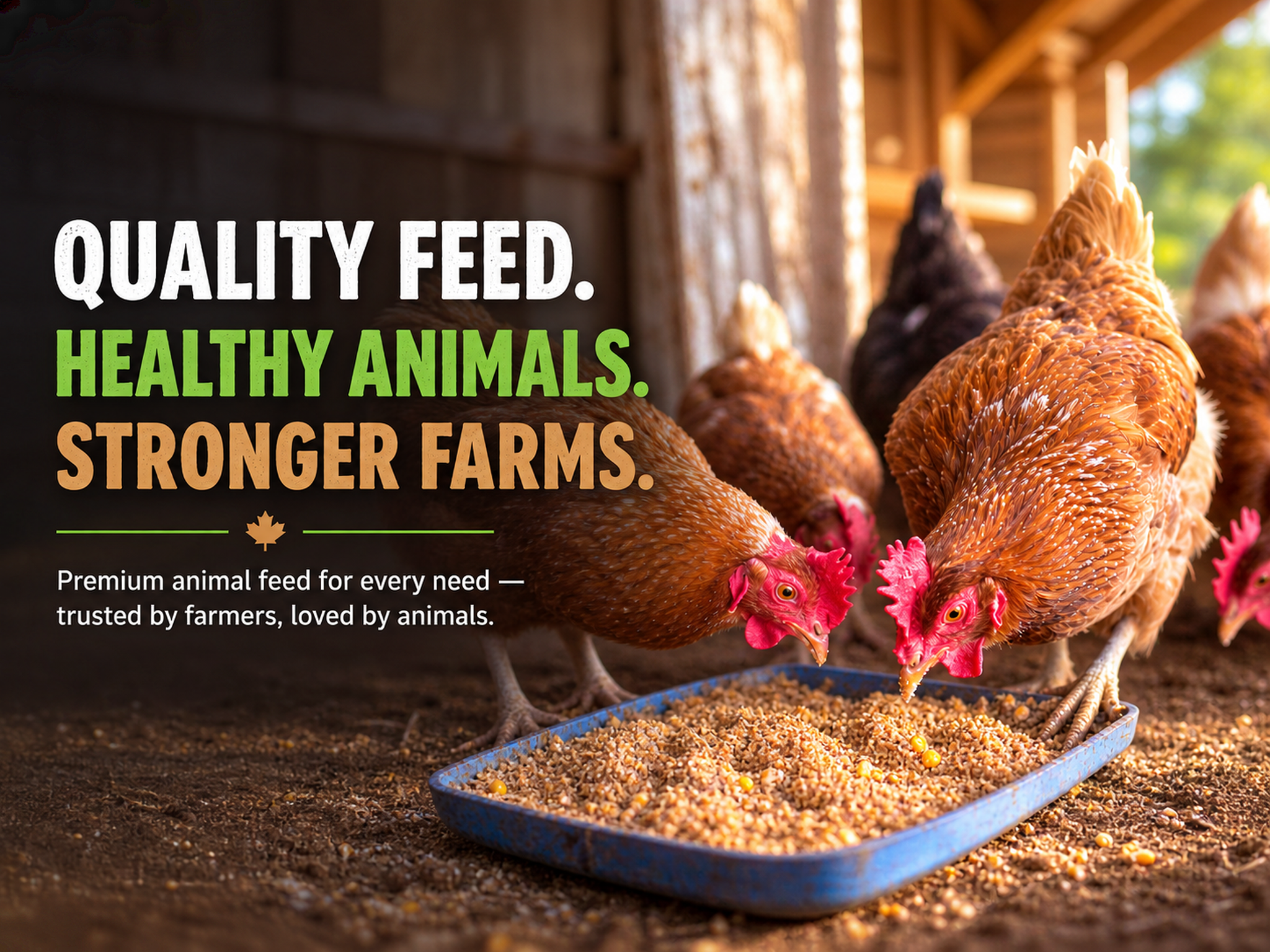
Chicken feed is one of the most structured feeding systems, as poultry require stage-specific nutrition. From chick starter feed to chicken layer feed, each stage of development demands a different balance of protein, energy, and minerals.
Young birds rely on chick starter feed for rapid growth, while adult hens require laying hen feed with higher calcium levels to support egg production. Supplemental elements such as oyster shells for chickens and chick grit help maintain digestion and eggshell quality.
A consistent poultry feed routine is essential. Chickens respond best to stable diets, and over-reliance on treats or inconsistent feeding can quickly affect productivity and health.
Deer Feed
Deer feed is often used to supplement natural forage, particularly in winter or for land management purposes. While deer are natural foragers, limited food availability in colder months can make supplemental feeding beneficial.
Common options include deer corn, deer pellets, and specialized deer attractant products. Feeding systems range from simple gravity feeders to automatic deer feeder setups that regulate distribution and reduce waste.
Responsible feeding is important. Supplemental feeding should support natural behavior rather than replace it, and consistency is critical if feeding during winter months.
Cattle Feed
Cattle feed is built around forage-based systems, with hay and pasture forming the majority of the diet. High-quality hay for cows is especially important during Canadian winters, when grazing is not available.
Supplemental feeds such as beef feed or dairy cattle feed are used depending on production goals. Dairy operations require higher energy and protein levels, while beef cattle may be supplemented for efficient weight gain.
Additional components like beet pulp for cattle and mineral supplements support digestion and overall health. Efficient feeding systems often include hay feeders or round bale feeders to reduce waste and maintain feed quality.
Horse Feed
Horse feed is centered on forage, with hay forming the foundation of a healthy horse diet. Horses are grazing animals and require a steady intake of fiber to maintain proper digestion.
Supplemental feeds such as horse pellets, beet pulp for horses, and alfalfa cubes can provide additional energy and nutrients when needed. Products like hay cubes and alfalfa pellets for horses offer convenient alternatives when traditional forage is limited.
Consistency is critical. Sudden changes in horse food can lead to digestive issues, so any adjustments should be made gradually.
Duck Feed
Duck feed shares similarities with chicken feed but includes additional nutritional considerations. Ducks require higher levels of niacin, especially during early development, making proper duckling feed or duck starter feed essential.
Cracked corn for ducks can provide supplemental energy, particularly in colder months, while balanced duck food ensures overall health and growth.
Water access is a key difference in duck feeding systems. Ducks require water to properly consume feed, making water availability just as important as the feed itself.
Hog Feed
Hog feed is designed for efficiency and rapid growth, with clearly defined feeding stages. Hog starter feed supports young pigs, while hog grower feed is used during development to promote weight gain and muscle growth.
Bulk hog feed is often used to reduce costs, especially in larger operations. Feeding systems such as hog self feeders and automatic hog feeders help regulate intake and reduce waste.
Proper storage and consistent feeding schedules are critical. Pigs respond well to routine, and efficient feeding systems can significantly improve overall performance.
Goat Feed
Goat feed combines forage, browse, and supplemental nutrition. High-quality hay for goats forms the base of the diet, while alfalfa hay for goats provides additional protein and calcium when needed.
Goat pellets are often used to supplement energy intake, particularly for dairy goats or growing animals. Minerals for goats—especially loose minerals for goats—are essential for preventing deficiencies and maintaining health.
Additional considerations include ammonium chloride for goats to prevent urinary issues and proper parasite management using wormer for goats.
Sheep Feed
Sheep feed is also forage-based but requires careful balance, as sheep are sensitive to overly rich diets. High-quality hay is the foundation, supported by targeted supplementation.
Lamb feed supports early growth, while ewe feed is essential during pregnancy and lactation. Early nutrition, including access to sheep colostrum and milk replacer for lambs when necessary, plays a critical role in flock health.
Efficient feeding systems such as hay feeders for sheep help reduce waste and maintain feed quality throughout the year.
Rabbit Feed
Rabbit feed is built almost entirely around fiber. Hay is the primary food source, supporting both digestion and dental health.
Rabbit pellets provide supplemental nutrition but should be used in moderation. Understanding what can rabbits eat and what do bunnies eat naturally helps guide proper feeding practices.
For both domestic and wild rabbits, consistency is key. A simple diet based on hay, with controlled supplementation, supports long-term health and prevents common digestive issues.
Building a Reliable Feeding System
Across all species, successful feeding systems share the same principles:
- High-quality primary feed (forage or base feed)
- Strategic supplementation
- Efficient feeding equipment
- Clean water access
- Consistent routines
Canadian conditions require flexibility, especially during winter when animals rely on stored feed. Planning ahead and maintaining feed quality are essential for year-round success.
Final Thoughts
Animal feed is more than just a daily task—it is the backbone of every productive farm and homestead. By understanding the needs of each species and applying consistent, practical feeding strategies, you can build a system that supports healthy animals and efficient operations.